
I absolutely adore making and sharing this Authentic Italian Carbonara Recipe because it captures the essence of Roman cooking in such a simple yet incredibly flavorful dish. Every time I prepare it, I’m reminded of why classic Italian comfort food never goes out of style. The silky sauce, crispy guanciale, and the perfect balance of cheese and pepper make this pasta truly unforgettable. It’s one of those dishes I always recommend to friends who want to impress without spending hours in the kitchen.
Why You'll Love This Authentic Italian Carbonara Recipe
What really excites me about this Authentic Italian Carbonara Recipe is the way the flavors come together with such harmony. The guanciale, with its delicate, savory fat, creates the perfect crispy bite, and when mixed with the creamy sauce made from eggs and parmigiano reggiano, the result is pure magic in every forkful. I love how the black pepper adds just the right kick, enhancing rather than overpowering the dish. It’s comfort food elevated to an art form.
Another reason why this recipe stands out for me is how incredibly easy it is to prepare. With just a handful of quality ingredients and straightforward steps, you can whip up a meal that feels fancy enough for special occasions yet quick enough for any weeknight. I often make it when friends drop by unexpectedly and want something impressive without the fuss. Plus, it’s wonderfully versatile, making it perfect for a cozy family dinner or a festive gathering.
Ingredients You'll Need

The beauty of this Authentic Italian Carbonara Recipe lies in the simplicity and quality of the ingredients. Each element plays a key role, whether it’s the salty, crispy guanciale or the nutty, umami-rich cheese, contributing to the perfect balance of taste, texture, and color.
- Guanciale: The star of the dish, this pork cheek has rich flavor and renders fat that coats the pasta beautifully.
- Eggs and egg yolks: They create the creamy, velvety sauce without the need for any cream.
- Parmigiano reggiano: Its sharp, nutty character adds depth and perfectly complements the guanciale.
- Black pepper: Freshly cracked for a punchy, warming spice that’s essential to the authentic flavor profile.
- Spaghetti: Classic pasta choice that holds the sauce wonderfully, providing the perfect mouthfeel.
- Kosher salt: Used for salting the pasta water to season the noodles from within.
- Pasta cooking water: Its starchiness helps emulsify the sauce, making it luscious and silky.
- Garlic (optional): Adds a subtle aromatic lift when used sparingly at the end of cooking.
- Parsley (optional): For a fresh, green garnish that brightens the final plate.
Directions
Step 1: Slice the guanciale into half-centimeter thick slices and then cut those into baton-sized pieces. This ensures it crisps evenly and renders its flavorful fat properly.
Step 2: In a large bowl, whisk together the eggs and extra yolks until smooth, then stir in the finely shredded parmigiano reggiano and black pepper. This mixture will become your creamy sauce.
Step 3: Bring a large pot of water to a rolling boil and add the kosher salt. Cook the spaghetti according to the package instructions until al dente. This usually takes around 8 to 10 minutes depending on the brand.
Step 4: Before draining the pasta, scoop out about 1 cup of pasta cooking water and set it aside. This starchy water is key to creating the silky texture of the sauce.
Step 5: While the pasta cooks, place the guanciale into a non-stick pan over medium-high heat. Let it cook for 4 to 5 minutes until golden and crisp. If you’re using garlic, add it in during the last minute to avoid burning and to soften its flavor.
Step 6: Drain the pasta quickly and add it straight into the pan with the guanciale. Toss to coat the noodles with the rendered fat thoroughly.
Step 7: Transfer the hot pasta and fat from the pan into the bowl with the egg and cheese mixture. Add about half a cup of the reserved pasta water and stir vigorously with the handle of a wooden spoon for about a minute. Watch as the sauce transforms from liquid to a creamy, luscious coating that clings perfectly to every strand.
Step 8: Serve immediately in warm bowls. Garnish with extra parmigiano reggiano, a pinch more black pepper, and a sprinkle of finely chopped parsley if you like. Enjoy it while it’s warm and creamy!
Servings and Timing
This Authentic Italian Carbonara Recipe yields about 4 generous servings, perfect for a family dinner or a small gathering. It takes approximately 5 minutes to prep all your ingredients, with around 15 minutes for cooking and combining everything. The total time from start to finish is about 20 minutes, making it a wonderfully quick meal that doesn’t sacrifice any authentic flavor. There’s no resting time required; this dish is best enjoyed fresh and hot right after it’s made.
How to Serve This Authentic Italian Carbonara Recipe
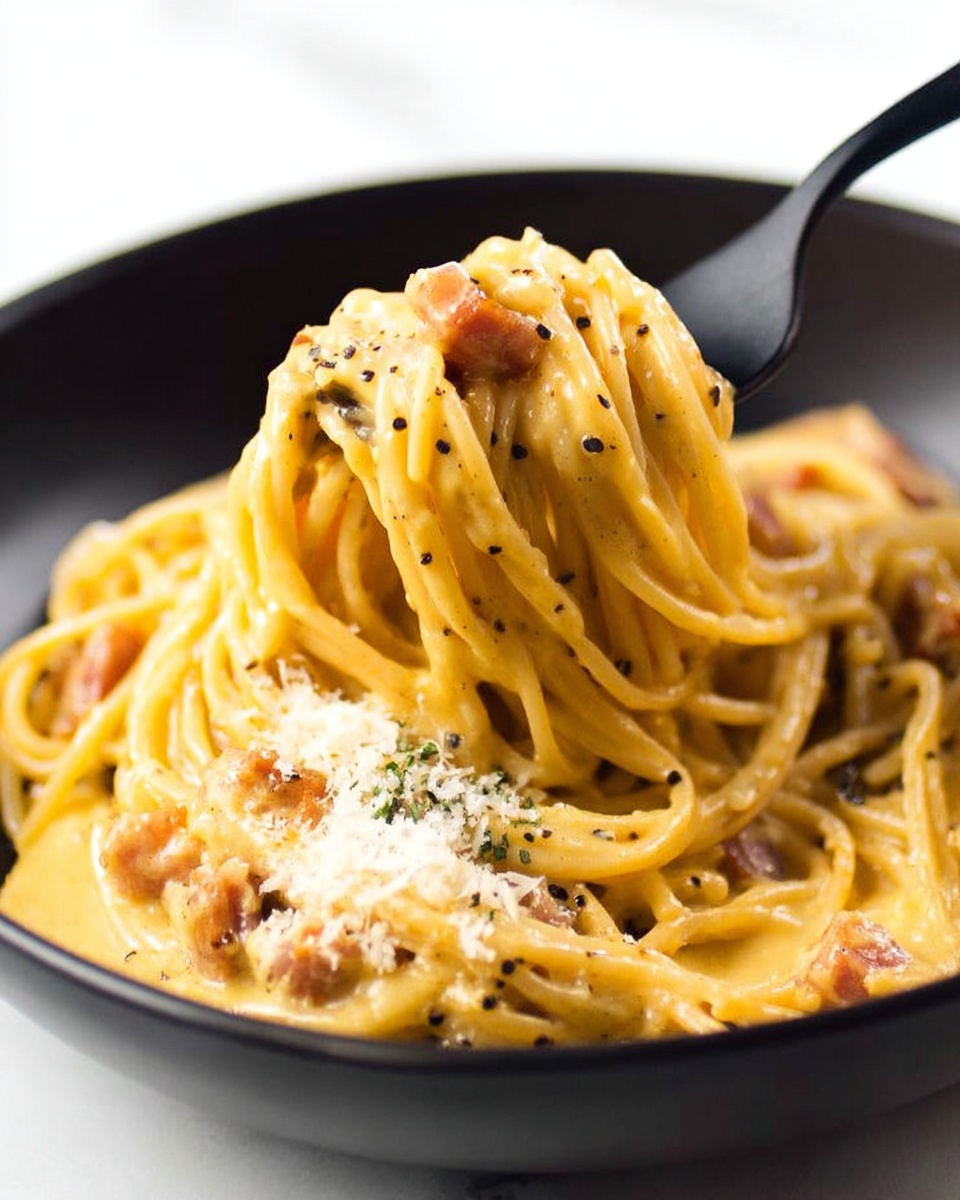
When I serve this Authentic Italian Carbonara Recipe, I love presenting it simply but elegantly, allowing the pasta and its sauce to shine. I often pair it with a crisp green salad dressed lightly with lemon vinaigrette to cut through the richness and add freshness to the meal. A side of garlic bread can also be a fantastic option to soak up any extra sauce left on the plate.
For garnishing, I like to finish the dish with an extra sprinkle of finely grated parmigiano reggiano and a pinch of coarse black pepper right on top. A few flakes of fresh parsley add a beautiful pop of green color and a hint of herbaceous brightness without overpowering the classic flavors. I recommend serving it piping hot, straight from the pan, to really enjoy that creamy texture at its best.
When it comes to beverages, I find that a chilled glass of crisp, dry Italian white wine like Pinot Grigio or Verdicchio complements the carbonara perfectly. If you prefer red, a light-bodied Sangiovese works beautifully. For non-alcoholic options, sparkling water with a twist of lemon or a gently brewed herbal tea provides a refreshing balance. This meal fits perfectly for weeknight dinners, intimate weekend lunches, or even special occasions where you want to impress without fuss.
Variations
Over time, I’ve experimented with a few variations on this Authentic Italian Carbonara Recipe that still honor its essence but provide fun twists. For example, if you’re unable to find guanciale, pancetta is a worthy substitute offering a similar flavor and texture, though I always prefer guanciale when possible for authenticity. Some friends even use quality smoked bacon in a pinch, which adds a distinctive smoky depth.
If you need a gluten-free version, substituting spaghetti with your favorite gluten-free pasta works well, just be mindful to cook according to package instructions. For those seeking a dairy-free twist, replacing parmigiano reggiano with a vegan cheese alternative is possible, though this will change the characteristic flavor and texture somewhat. Personally, I recommend keeping the original ingredients if possible to fully experience the authentic taste.
Flavor-wise, I occasionally add a touch of freshly grated nutmeg or a pinch of red chili flakes to introduce subtle warmth and complexity. Cooking methods can also be tweaked slightly — for instance, some like to crisp the guanciale in the oven for a different texture or toss the pasta off heat with the sauce to avoid scrambling the eggs. I find the stovetop method works wonderfully and is quick enough for any occasion.
Storage and Reheating
Storing Leftovers
If you happen to have any leftovers, I recommend storing your carbonara in an airtight container placed in the refrigerator. It’s best eaten within 1 to 2 days for optimal flavor and texture, as the creamy sauce can thicken and the pasta may absorb too much liquid over time. Using glass containers helps keep the dish fresh and prevents any unwanted odors from seeping in.
Freezing
Freezing this dish is generally not ideal because the texture of eggs and cheese can change once thawed, sometimes becoming grainy or watery. However, if you do decide to freeze, make sure the pasta is fully cooled and store it in a freezer-safe container or heavy-duty freezer bag, removing as much air as possible. It can keep for up to 1 month. When ready to enjoy, thaw overnight in the fridge before reheating gently to avoid curdling the sauce.
Reheating
Reheating carbonara requires a light touch to preserve its silky texture. I prefer warming it gently over low heat on the stovetop, adding a tiny splash of water or broth to loosen the sauce if needed. Avoid using a microwave on high heat, as this can cause the eggs to scramble and the cheese to separate. Stir frequently and reheat until just warmed through for the best results.
FAQs
Can I use bacon instead of guanciale?
Yes, bacon is a common substitute if guanciale is unavailable. While bacon has a smokier and sometimes saltier flavor, it will still give you that delicious crispy texture. Choose a quality unsmoked or lightly smoked bacon to keep it closer to authentic flavors.
Why does authentic carbonara not use cream?
Traditional Italian carbonara achieves its creamy texture solely from eggs, cheese, and pasta water. Adding cream is a common adaptation outside Italy but not authentic to the recipe. The silky sauce comes from carefully combining these ingredients off the heat to avoid curdling.
How do I prevent the eggs from scrambling?
It’s important to mix the hot pasta with the egg mixture off the heat and to stir vigorously while adding some reserved pasta water. This ensures the sauce emulsifies gently without direct heat scrambling the eggs. Using room temperature eggs also helps.
Can I use other types of pasta?
Absolutely! Though spaghetti is the classic choice, you can use other long pastas like bucatini or fettuccine. Short pasta shapes generally don’t hold the sauce as well but can work in a pinch. Just make sure to adjust cooking times accordingly.
Is it okay to add garlic to carbonara?
Garlic is not traditionally used in authentic Italian carbonara, but adding a small amount finely minced at the end of frying the guanciale is a nice variation that some people enjoy. If you do add garlic, keep it subtle to not overpower the dish’s delicate balance.
Conclusion
I hope you feel inspired to try this Authentic Italian Carbonara Recipe soon because it’s one of those dishes that truly feels like a warm Italian hug on a plate. Every element comes together so beautifully, and with just a little care, you’ll have a creamy, flavorful pasta that never fails to impress. Trust me, once you make it yourself, it will become one of your go-to favorites for quick weeknight dinners or special gatherings alike. Enjoy every bite!
Print
Authentic Italian Carbonara Recipe
- Prep Time: 5 minutes
- Cook Time: 15 minutes
- Total Time: 20 minutes
- Yield: 4 servings
- Category: Main Course
- Method: Stovetop
- Cuisine: Italian
Description
Authentic Italian Carbonara made with crispy guanciale, creamy egg and Parmesan sauce, and perfectly cooked spaghetti. This classic Roman dish is quick to prepare and delivers rich, comforting flavors with simple, high-quality ingredients.
Ingredients
Main Ingredients
- 175g / 6 oz guanciale
- 2 large eggs
- 2 egg yolks
- 100g / 3.5 oz Parmigiano Reggiano, finely shredded (or Pecorino Romano as a substitute)
- ¼ tsp black pepper
- 400g / 14 oz spaghetti
- 1 tbsp cooking/kosher salt (for cooking pasta)
- ½ cup pasta cooking water
- 1 garlic clove, finely minced (optional)
- Parsley, finely chopped (for garnish)
- Extra Parmigiano Reggiano (for serving)
Instructions
- Prepare the Guanciale: Cut the guanciale into 0.5cm (⅕ inch) thick slices, then slice again into batons. This will allow for even cooking and create crispy pieces.
- Make the Carbonara Sauce: In a large bowl, whisk together the eggs and egg yolks until smooth. Stir in the finely shredded Parmigiano Reggiano and black pepper. Set aside.
- Cook the Pasta: Bring 4 litres (4 quarts) of water to a rolling boil and add 1 tablespoon of kosher salt. Cook the spaghetti according to the package instructions until al dente.
- Reserve Pasta Water: Just before draining the pasta, scoop out about 1 cup of the pasta cooking water and set it aside. Then drain the pasta thoroughly.
- Cook the Guanciale: While the pasta cooks, heat a non-stick pan over medium-high heat. Add the guanciale and cook for 4 to 5 minutes until golden and crispy. No additional oil is needed as the fat will render from the guanciale. If using, add minced garlic in the last minute to gently cook it without burning.
- Toss Pasta in Guanciale Fat: Add the hot drained spaghetti into the pan with the guanciale and toss well to coat the pasta evenly in the flavorful rendered fat.
- Combine Pasta and Sauce: Transfer the pasta and the guanciale fat from the pan into the bowl with the egg and cheese mixture. Add ½ cup (125 ml) of the reserved pasta water. Stir vigorously with the handle of a wooden spoon for about 1 minute until the sauce emulsifies and becomes creamy, clinging beautifully to each strand of pasta.
- Serve Immediately: Divide the Carbonara into warm bowls. Garnish with extra Parmigiano Reggiano, a pinch of black pepper, and finely chopped parsley. Serve right away to enjoy the dish at its best.
Notes
- Guanciale is traditional in Carbonara for its rich flavor, but pancetta can be used as a substitute if unavailable.
- Using both whole eggs and extra yolks creates the signature creamy sauce without scrambling.
- Parmigiano Reggiano is preferable, though Pecorino Romano is a common alternative for a sharper taste.
- Garlic is optional; adding it at the end prevents it from overpowering the dish.
- Reserve enough pasta water as it is essential for creating the silky sauce consistency.


Leave a Reply