
I absolutely love sharing this Cabbage Shrimp Jambalaya Recipe because it blends the bold, comforting flavors of traditional jambalaya with a unique, hearty twist thanks to cabbage. For me, it’s a vibrant, colorful dish that brings together tender shrimp, smoky sausage, and the gentle sweetness of cabbage in a way that feels both familiar and refreshingly new. It’s a recipe I always come back to when I want something satisfying and flavorful without spending all day in the kitchen.
Why You'll Love This Cabbage Shrimp Jambalaya Recipe
What makes this dish so special to me is the way the flavors balance each other perfectly. The seasoning is just right—not too spicy but with enough cayenne and paprika to keep things exciting. The shrimp stays tender, while the cabbage absorbs all those incredible juices and spices, softening to a perfect texture that adds a lovely twist to the usual jambalaya experience. Plus, the sausage adds that smoky depth that I crave in Cajun cooking.
Another thing I love about this recipe is how approachable it is. I’m all for bold flavors but I also appreciate a recipe that doesn’t require a bunch of complicated steps or hard-to-find ingredients. You can throw it together pretty quickly, and it feels like a wholesome, show-stopping meal for dinners with family or casual get-togethers with friends. It stands out because it combines soul-warming flavors with a fresh ingredient I don’t usually expect in jambalaya—cabbage—and that little surprise always sparks compliments.
Ingredients You'll Need

These ingredients are simple yet essential, each playing a key role in creating the vibrant flavors, texture contrasts, and beautiful colors of this dish. From fresh vegetables to seasoning and quality proteins, every element works together to make Cabbage Shrimp Jambalaya Recipe truly memorable.
- 1 pound raw shrimp, peeled and deveined: The star protein, tender and quick-cooking, providing a delicate seafood flavor.
- 1 teaspoon parsley flakes: Adds a subtle herbal freshness that brightens the seafood.
- ¼ teaspoon paprika: Gives the shrimp just a hint of smoky warmth without overpowering.
- 1 medium-sized head cabbage, cored and chopped: Adds texture and mild sweetness, breaking down beautifully as it cooks.
- Salt, black pepper, and cayenne pepper to taste: Essential for seasoning at multiple steps, bringing layers of flavor and heat.
- 3 tablespoons butter or oil: For sautéing the vegetables and sausage, adding richness.
- 1 onion, chopped: Part of the classic Cajun “trinity,” building savory depth.
- 1 green bell pepper, chopped: Adds crunch and a subtle grassy sweetness.
- 2 ribs fresh celery, chopped: Completes the trinity with aromatic, slightly bitter notes.
- 1 pound sausage, sliced into circles then halved: Look for gluten-free options if needed; provides savory, smoky flavor and texture.
- 2 garlic cloves, minced: Adds a fragrant kick to the base flavors.
- 1 cup uncooked white rice: Absorbs all the delicious juices, giving body to the dish.
- 2 10-ounce cans Rotel tomatoes with green chilies, undrained: I prefer mild for gentle heat and vibrant tomato flavor.
- 2 cups chicken broth: Make sure it’s gluten-free if necessary; it adds moisture and depth to the cooking rice and vegetables.
Directions
Step 1: Start by seasoning the shrimp with parsley flakes and paprika. Set these aside to let the flavors meld while you prepare the rest of the ingredients.
Step 2: Sprinkle salt, black pepper, and cayenne pepper over the chopped cabbage. Toss gently to combine. This step not only seasons the cabbage but also helps it break down during cooking for an evenly tender texture.
Step 3: Heat butter or oil in a large Dutch oven or deep cast iron skillet over medium-high heat. Add the chopped onion, green bell pepper, and celery. Cook, stirring frequently, until the vegetables start to brown lightly—around 5 to 7 minutes. This creates your flavorful base.
Step 4: Add the sausage to the pot. Cook for another 3 minutes, stirring often, until the sausage pieces develop a nice golden-brown exterior that intensifies their flavor.
Step 5: Stir in the garlic and cook for one more minute, stirring constantly, to release its aroma without burning it.
Step 6: Add the cabbage, both cans of Rotel tomatoes (with their juices), rice, and chicken broth. Stir thoroughly and bring the mixture up to a boil, which should take about 3 to 5 minutes.
Step 7: Once boiling, reduce the heat to medium-low.
Step 8: Cover the pot and let it simmer gently for 20 minutes. Stir occasionally but don’t overdo it—this step allows the rice to cook and soak in all those wonderful flavors.
Step 9: After 20 minutes, stir in the seasoned shrimp. Continue cooking uncovered for another 15 minutes, stirring often, until the rice is fully tender and the shrimp turn pink and opaque.
Servings and Timing
This Cabbage Shrimp Jambalaya Recipe yields about 6 generous servings, making it perfect for family dinners or sharing with friends. You’ll spend approximately 15 minutes prepping the ingredients, and the cooking process takes around 55 minutes, so the total time you should set aside is about 1 hour 10 minutes. No additional resting or cooling time is required, but letting it sit for a few minutes before serving helps the flavors meld even further.
How to Serve This Cabbage Shrimp Jambalaya Recipe
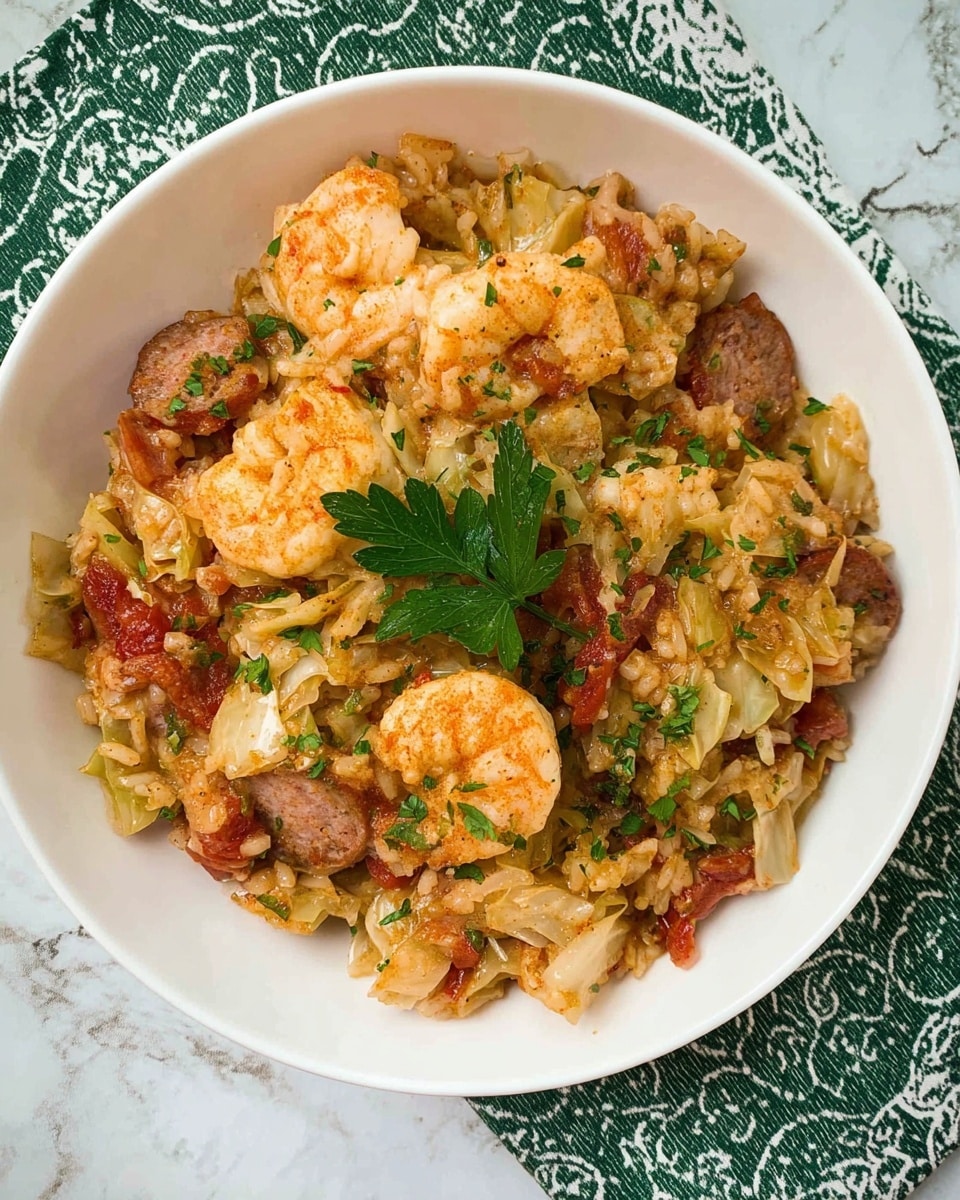
When I serve this jambalaya, I love to complement it with simple sides that won’t overpower those bold flavors. A crisp green salad with a tangy vinaigrette or some crusty gluten-free bread are my go-tos. The bread helps scoop up any delicious sauce left behind, while the salad adds a refreshing contrast to the hearty main.
For garnishing, a sprinkle of fresh parsley or green onions adds a pop of color and freshness that brightens the dish right before serving. I also like to serve it with lemon wedges—just a little squeeze of citrus really lifts the shrimp’s flavor beautifully. Presentation-wise, I spoon it into shallow bowls so that all the ingredients are visible and inviting.
As for beverages, this jambalaya pairs wonderfully with chilled white wines like a crisp Sauvignon Blanc, or if you’re in the mood for cocktails, a classic whiskey sour balances the spices nicely. For non-alcoholic options, iced tea with a splash of lemon is my favorite. This dish shines best served hot or warm, straight from the pot, making it ideal for cozy weeknight meals or casual weekend gatherings.
Variations
One of the things I enjoy most about this Cabbage Shrimp Jambalaya Recipe is its versatility. If sausage isn’t your thing, you can swap it out for chicken or even smoked turkey sausage to tweak the protein profile while keeping the flavor depth intact. Those looking for a pescatarian version can easily leave out the sausage entirely and add extra shrimp or some firm tofu for a vegetarian twist.
If you need it vegan, try replacing shrimp and sausage with a hearty mix of mushrooms, tempeh, or seasoned chickpeas, and use vegetable broth instead of chicken broth. Just be sure to adjust your seasoning slightly, as the umami from the sausage and shrimp won’t be there, but with a little extra smoked paprika or liquid smoke, you can get close.
You can also experiment with different cooking methods. I’ve sometimes finished this dish in a covered Dutch oven inside the oven at 350°F for the last 15 minutes instead of stovetop simmering, which gently melds the flavors while freeing up your stovetop for other dishes. Each method brings its own subtle nuance to the finished jambalaya.
Storage and Reheating
Storing Leftovers
Any leftover Cabbage Shrimp Jambalaya Recipe should be cooled completely before storing. I recommend transferring it to airtight containers—glass or BPA-free plastic containers work great—and refrigerating. It will keep well for up to 4 days, maintaining most of its flavors and textures, making it perfect for next-day lunches or quick dinners.
Freezing
This jambalaya freezes nicely if you want to save it for longer. Place cooled portions into freezer-safe containers or heavy-duty freezer bags, removing as much air as possible to prevent freezer burn. It will keep for up to 3 months in the freezer. When you’re ready to enjoy it, thaw it in the refrigerator overnight before reheating to preserve the best taste and texture.
Reheating
To reheat, I find the stovetop is best for maintaining the dish’s texture. Warm it gently over medium-low heat in a covered pan, stirring occasionally and adding a splash of broth or water if it looks dry. Microwave works too but stir halfway through heating to avoid hot spots. Avoid overheating as shrimp can become rubbery and cabbage mushy. The goal is to warm it through while preserving the tender bite and bold flavors.
FAQs
Can I use frozen shrimp in this Cabbage Shrimp Jambalaya Recipe?
Absolutely! Just be sure to thaw the shrimp fully before adding them to the pot. Pat them dry to avoid excess moisture, which can dilute the flavors and affect the dish’s texture. Frozen shrimp works just as well and makes this recipe even more convenient.
What kind of sausage should I use for gluten-free jambalaya?
I recommend checking labels carefully and opting for sausages labeled gluten-free. Andouille sausage is a classic choice for jambalaya, but many other smoked sausages suitable for gluten-free diets can work beautifully. The key is to choose one with good seasoning and smokiness to boost the dish’s flavor.
Can I make this recipe spicy?
Definitely! You can increase the cayenne pepper or add chopped jalapeños along with the Rotel tomatoes for more heat. Just remember to adjust gradually so you don’t overpower the other flavors. If you prefer mild, the recipe as-is hits a nice balance.
Is it okay to use brown rice instead of white rice?
Yes, but you’ll need to adjust the cooking time and liquid accordingly. Brown rice takes longer to cook and requires more broth, so add about 2 ¼ cups of broth and simmer 40 to 45 minutes covered, stirring occasionally. The flavors are just as delicious, with a nuttier rice texture.
Can I prep this recipe ahead of time?
You can chop all the vegetables and season the shrimp in advance to save time. Just keep the ingredients separate and refrigerate until you’re ready to cook. I don’t recommend cooking the whole dish ahead because the cabbage and shrimp are best freshly cooked to maintain texture and flavor.
Conclusion
If you’re looking for a dish that wraps bold Cajun flavors around a fresh, unique ingredient like cabbage, I truly encourage you to try this Cabbage Shrimp Jambalaya Recipe. It’s one of those meals where every bite feels like a comforting hug, yet it’s fresh and vibrant enough to be a fast favorite. Whether you’re cooking for company or a cozy night at home, this recipe never disappoints.
Print
Cabbage Shrimp Jambalaya Recipe
- Prep Time: 20 minutes
- Cook Time: 50 minutes
- Total Time: 1 hour 10 minutes
- Yield: 6 servings
- Category: Main Dish
- Method: Stovetop
- Cuisine: Cajun
- Diet: Gluten Free
Description
This Cabbage Jambalaya is a flavorful, gluten-free twist on the classic Cajun dish, combining succulent shrimp, savory sausage, fresh cabbage, and a medley of vegetables simmered in a zesty tomato and chicken broth base. Perfectly seasoned with paprika, parsley, and cayenne pepper, this hearty one-pot meal delivers authentic Southern comfort with a healthy vegetable boost.
Ingredients
Seafood
- 1 pound raw shrimp, peeled and deveined
Vegetables
- 1 medium-sized head cabbage, cored and chopped
- 1 onion, chopped
- 1 green bell pepper, chopped
- 2 ribs fresh celery, chopped
- 2 garlic cloves, minced
Meat
- 1 pound sausage, sliced into circles then in half (make sure gluten free)
Pantry & Seasonings
- 1 teaspoon parsley flakes
- ¼ teaspoon paprika
- Salt, black pepper, and cayenne pepper to taste
- 3 tablespoons butter or oil
- 1 cup uncooked white rice
- 2 10-ounce cans Rotel tomatoes with green chilies, undrained (mild)
- 2 cups chicken broth (make sure gluten free)
Instructions
- Season the shrimp: Combine the peeled and deveined raw shrimp with parsley flakes and paprika. Set aside to allow the flavors to meld.
- Prepare the cabbage: Sprinkle salt, black pepper, and cayenne pepper to taste over the chopped cabbage. Toss well and set aside. The salt softens the cabbage and the spices infuse flavor.
- Sauté the vegetables: In a large Dutch oven or deep cast iron skillet, heat butter or oil over medium-high heat. Add the chopped onion, green bell pepper, and celery. Brown the mixture until the vegetables are almost caramelized.
- Cook the sausage: Add the gluten-free sliced sausage to the pot. Stir frequently and continue cooking for about 3 minutes until the sausage is nicely browned.
- Add garlic: Incorporate the minced garlic into the pot and cook for an additional minute, stirring constantly to prevent burning.
- Add remaining ingredients: Stir in the seasoned cabbage, undrained Rotel tomatoes with green chilies, uncooked rice, and chicken broth. Bring the mixture to a gentle boil over medium-high heat, stirring occasionally to ensure even cooking.
- Simmer: Reduce the heat to medium-low, cover the pot, and cook for 20 minutes. Stir occasionally but gently to avoid breaking up the ingredients.
- Add shrimp and finish cooking: After 20 minutes, stir in the seasoned shrimp. Cook uncovered for an additional 15 minutes or until the rice is tender and the shrimp is cooked through, stirring often to combine the flavors evenly.
Notes
- Make sure to use gluten-free sausage and chicken broth to keep the dish gluten-free.
- The cabbage is seasoned and salted ahead to help break it down and cook evenly.
- You can adjust cayenne pepper to your preferred spice level.
- Using a Dutch oven or deep cast iron skillet ensures even heat distribution and perfect simmering.
- Do not over-stir during the simmering step to maintain texture.
- Rotel tomatoes can be substituted with other diced tomatoes with green chilies if preferred.


Leave a Reply